Pronounce it oh-ee-oh when you’re there.
That was one of the first things I learned about Oʻahu, not from a guidebook, but from someone who loved the place enough to want to say it right. I didn’t travel to Hawaiʻi thinking I would end up standing ankle-deep on a coral flat, wind tugging at my shirt, watching the water for the faintest flick of a tail. But the truth is, once the chance came, I knew exactly where I would spend at least part of my time on the islands.
I’ve been fly fishing for…a while now. Long enough to stop counting the years and start remembering the moments. I’ve fished with more than a few guides, and even spent some time guiding myself. When you do that, you quietly build a list of good guides, what makes a good guide great and what kind of presence you want on the water beside you.
On Oʻahu, I found that in Capt. Jesse Cheape.
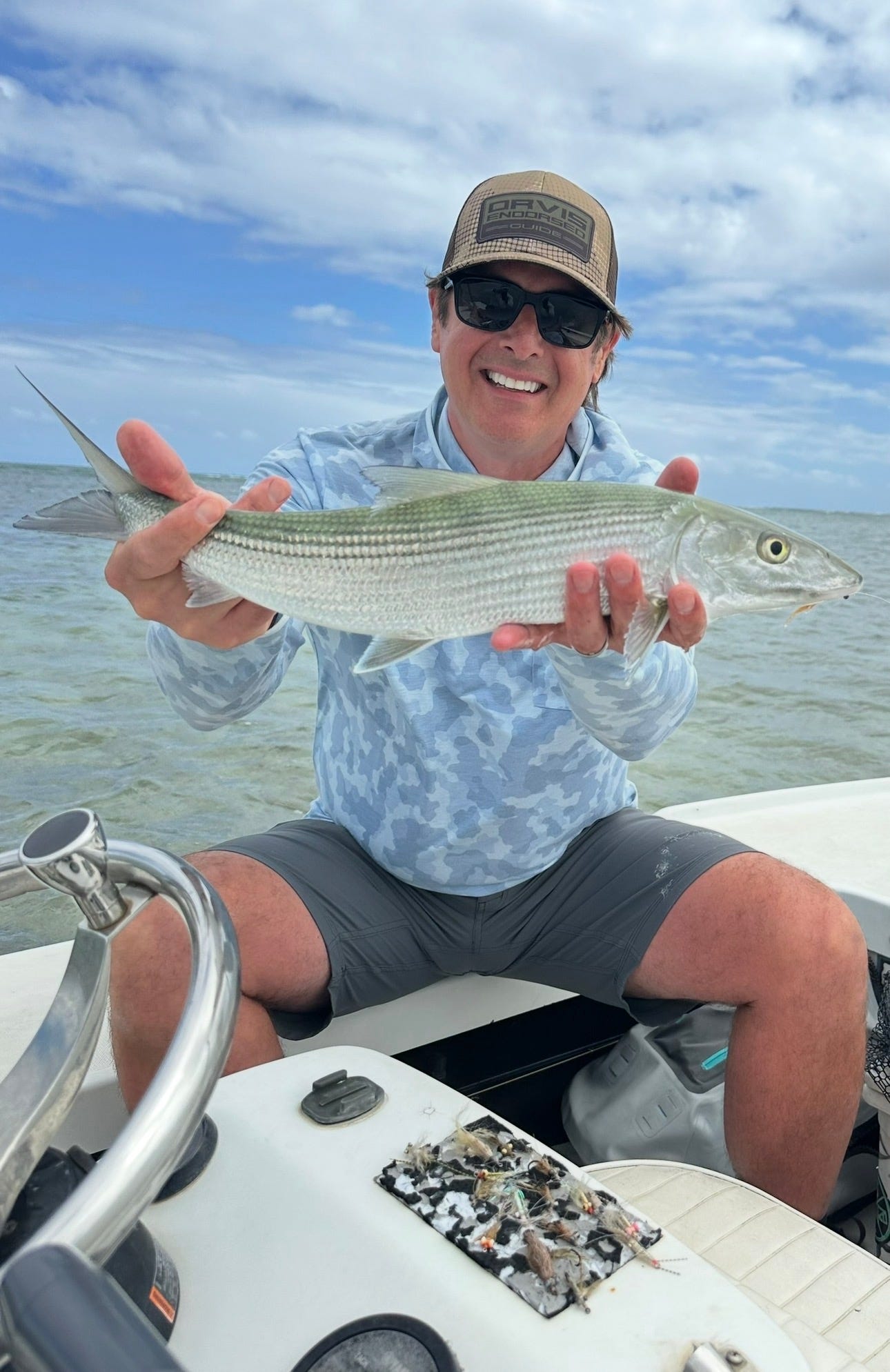
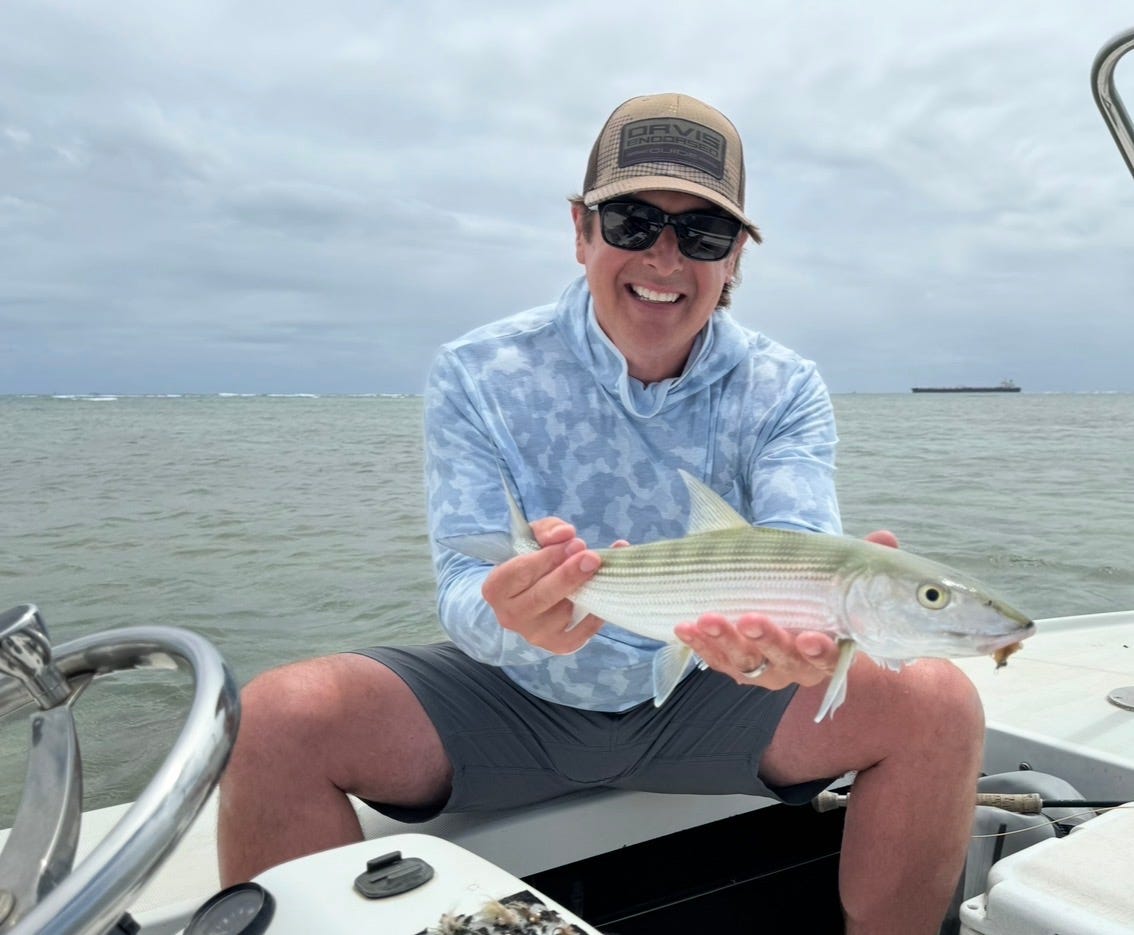
Hawaiian bonefish aren’t like other bonefish. They carry themselves differently, as if the Pacific itself had taught them caution. They are big and paired with that size is a wariness that borders on mystical. They live over broad, luminous flats that stretch toward the horizon in sheets of blue-green glass, especially along the southern and eastern sides of the island. The locals say simply, “Look for the tails,” and they say it with a shrug, as if this is ordinary life to drive past volcanoes and watch bonefish feeding ten yards from shore.
But here’s the thing: these fish are spooky as hell.
Whatever lead you think is enough probably isn’t. Ten to twelve feet might as well be three if you don’t get it just right. If you come from redfish country, with your familiar expectations, fish happy, fish visible, fish that tolerate your learning curve. I suggest you need to set those observations aside. These fish will teach you new humility.
Jesse has seen it all. He talks about “redfish guys” with a grin that is half amusement and half empathy. He is patient, in the way only someone can be who has put in the lonely hours figuring out a fishery that gives nothing away without cost. He still speaks with reverence about the first bonefish he ever caught here. When you pass the spot, he points not boastfully, but gratefully, as though that fish opened a door he’s still walking through.
The flats feel alive. The trade winds push low, warm air across your face. Clouds throw slow-moving shadows that look like schools of fish until they aren’t. Underfoot, coral crunches faintly and the water breathes in and out around your legs. Then, almost casually, you notice movement with tails tipping, backs pushing, shadows sliding forward with purpose.
The fish come to you like a conveyor belt.
Shot after shot after shot, each one a tiny jolt of hope and discipline: don’t rush, don’t line them, don’t forget to breathe. You realize how much of fly fishing is listening to the wind, water, and the small voice in your head that still believes something incredible might happen.
Jesse celebrates your small victories. He understands that this isn’t just about catching a fish; it’s about being exactly where you are, fully present, without the buzz of everything else that normally fills your life.
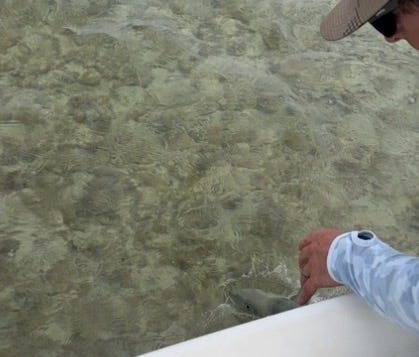
When the bonefish finally eats, the line tightens and the world seems to snap into sharper focus and the flat erupts. The fish rockets away across the Pacific shallows and you are suddenly connected to wildness by nothing more than a strip of fly line and your own beating heart. The reel sings. The wind lifts. For a moment, you are both completely out of control and exactly where you belong.
And then, after the run, after the release, after the quiet smile you didn’t realize you were wearing, you look around.
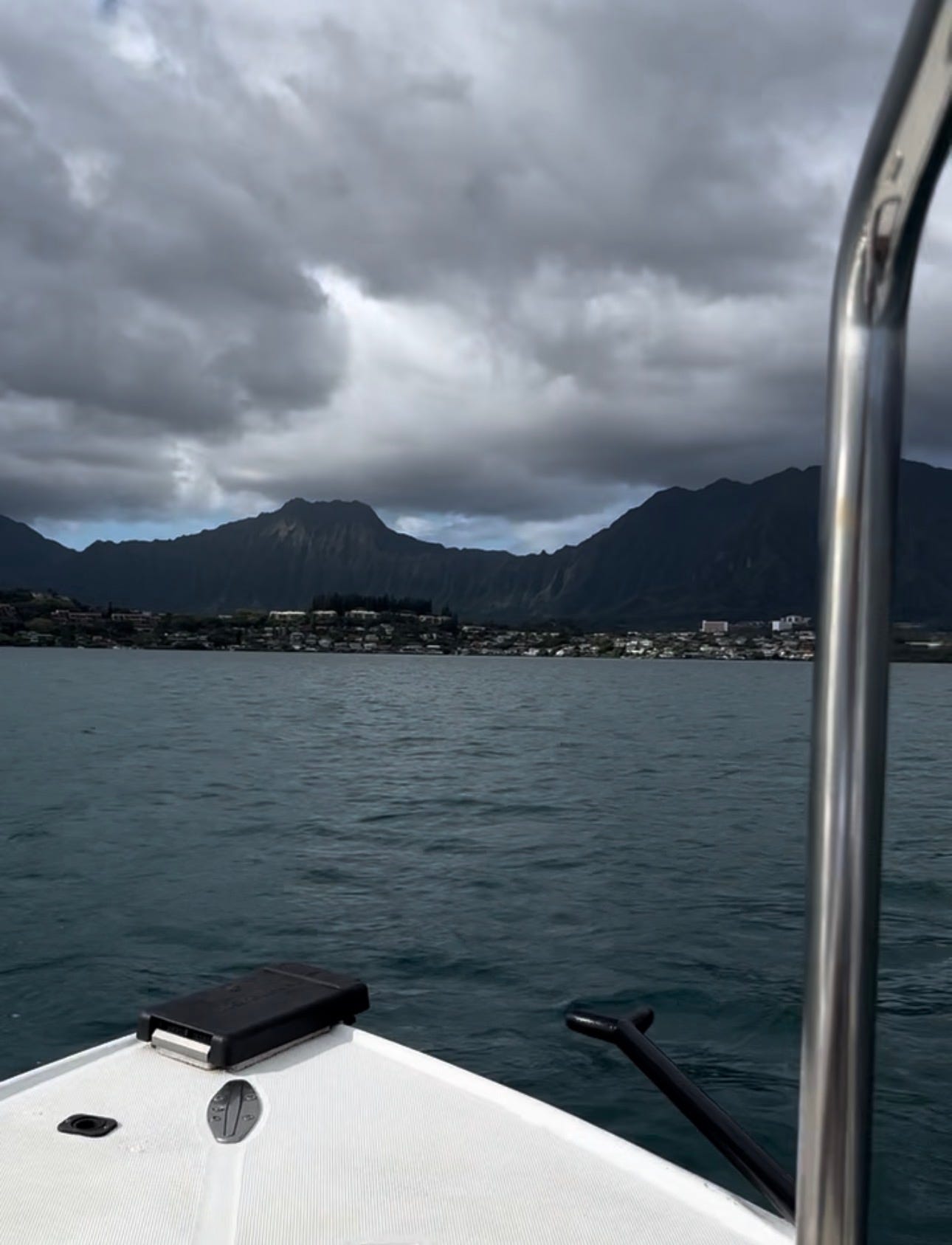
The jets fly over in Honolulu, a few miles away, the mountains rise in the distance like green cathedrals. The ocean stretches farther than thought. Somewhere a myna bird calls, and the trade winds move through the palms like breath. You understand that this trip wasn’t only about bonefish. It was about being humbled—lin the best possible way by a place that doesn’t need your presence but welcomes it anyway.
Would I go back?
In a heartbeat. Not because it was easy. It wasn’t. But because those flats remind you of things it’s easy to forget: that life is short, that wild places still exist, and that sometimes the most important journey isn’t measured in miles, but in the length of one quiet cast into clear water.
And yes—now I know how to say it.
Oʻahu.
 /fishingtv
 /fishingtvapp
 /fishingtv