I first had the opportunity to fish with Jacob Brewster several years ago when my son and I spent a day on the water with him on the Soquee River in Georgia. It was one of those experiences that sticks with you, not just because of the fishing, but because of the person you’re sharing the river.
Over the years I’ve continued to follow Jacob on social media, watching with admiration as he consistently catches fish wherever he goes. What stands out about Jacob is not just his ability to catch trout on a fly rod, though he is exceptionally skilled, but his versatility as an angler. He can just as easily head down to the Gulf Coast, fish from a pier, and somehow end up catching nearly every species of saltwater fish that swims by the pier.
Jacob has also spent a great deal of time sharing his knowledge with others. His YouTube videos covering techniques, tactics, and fly-fishing skills have helped countless anglers, including myself, become better fishermen over time.
But what impresses me most is his commitment to the people he guides. Jacob genuinely wants everyone who fishes with him to succeed and to enjoy the experience. That passion shows in the way he approaches every day on the water.
It was a real pleasure for me to put this article together and spend some time getting inside Jacob’s head, learning about how he first got started in fly fishing, what shaped him as an angler, and the flies and techniques he trusts most on the water.
I hope you enjoy this conversation with Jacob Brewster and the take aways from new approaches to use next time you’re back on the water. Jacob, thank you for the time, the knowledge, and the inspiration you’ve given so many anglers along the way.
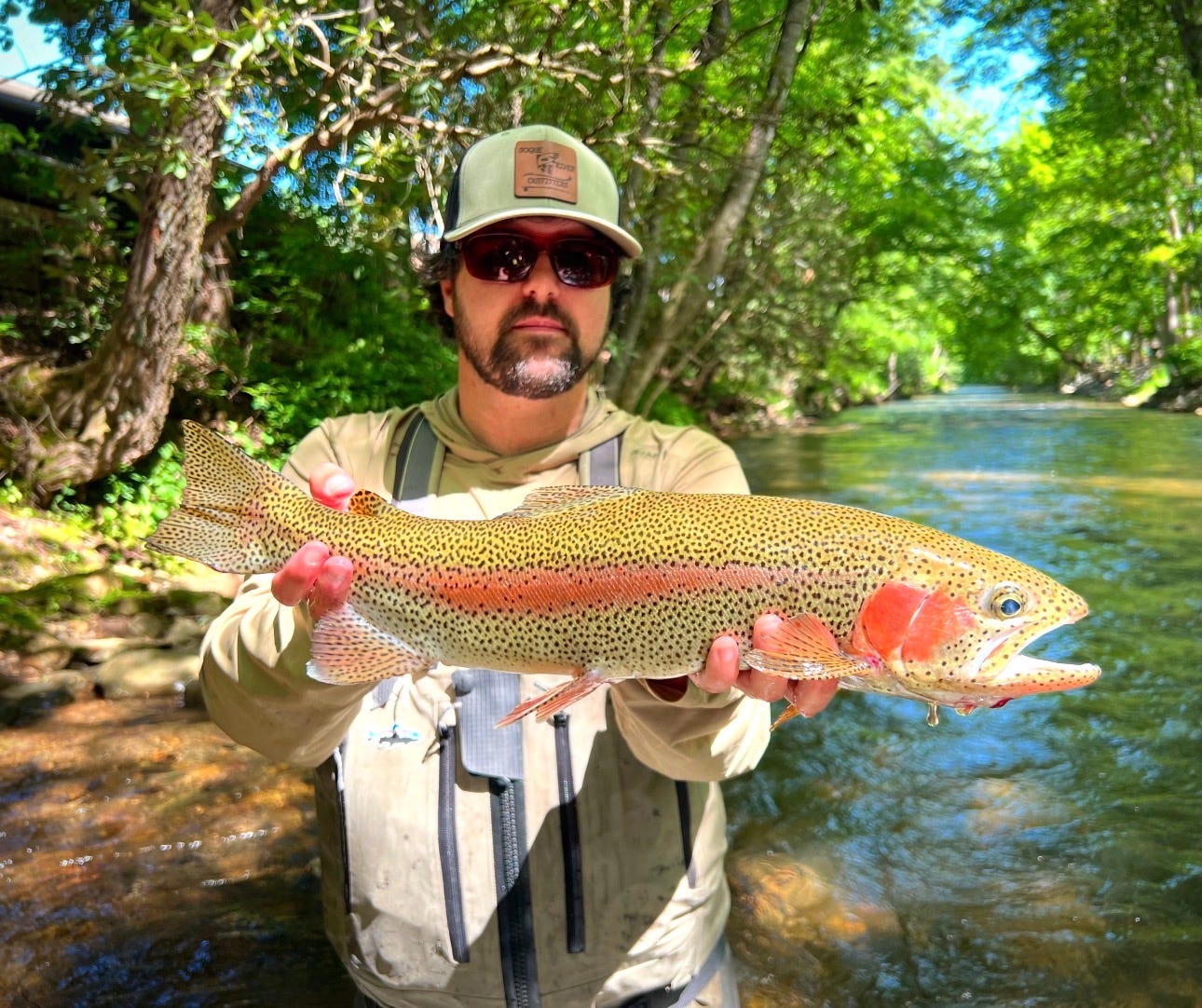
Raised by the River
Some anglers discover fly fishing later in life. For Jacob Brewster, it’s simply always been there, part of the rhythm of growing up and part of the way he learned to see water, insects, and trout.
“I’ve been fly fishing longer than I’d like to admit,” Brewster says with a laugh. “I just turned 31, and I’ve been fishing or fly fishing since I was around two or three years old. So, I’ve got about 28 or 29 years of it under my belt.”
That kind of timeline doesn’t just create an angler. It shapes a life.
A Childhood Spark
Unlike many fly fishermen, Brewster didn’t inherit the sport from a parent or grandparent. In fact, no one in his family fly fished. Instead, his curiosity was sparked by television.
“Watching the Outdoor Channel with my dad is really what got me interested,” he recalls. “For some reason the shows with fly fishing and trout caught my attention.”
Even as a small child he found himself mimicking the casting motion with a simple kid’s fishing rod.
“At an extremely young age I started replicating the motions of casting. Whether I knew it or not at the time, those were the beginning days of my fly fishing journey.”
That curiosity quickly turned into experimentation.
Back in the 1990s, Brewster remembers the excitement of visiting the fishing aisle at Walmart.
“I always wanted to go straight to the fishing section,” he says. “Eventually I started putting two and two together.”
Before he even owned proper tools, Brewster began tying his own flies using whatever materials he could find.
“My first flies were tied on small bream hooks using wire from my dad’s shop and random feathers from Walmart’s craft section,” he says. “They were tied completely by hand with no vise.”
Eventually he discovered the Skykomish Deluxe Fly Tying Kit at Walmart, which gave him his first real introduction to tying flies.
His first fly rod was a simple Shakespeare combo. Later, he convinced his parents to buy a more complete setup from Scientific Anglers.
“That combo came with a two-piece rod and reel, line, leader, flies, and a VHS tape called Fly Fishing Made Easy.”
That VHS tape became a turning point.
“It was the first time I really learned basic casting, how to read a river, and different techniques.”
The kit even included early indicator materials and a hand-tied knotted tapered leader, long before modern indicator systems became common.
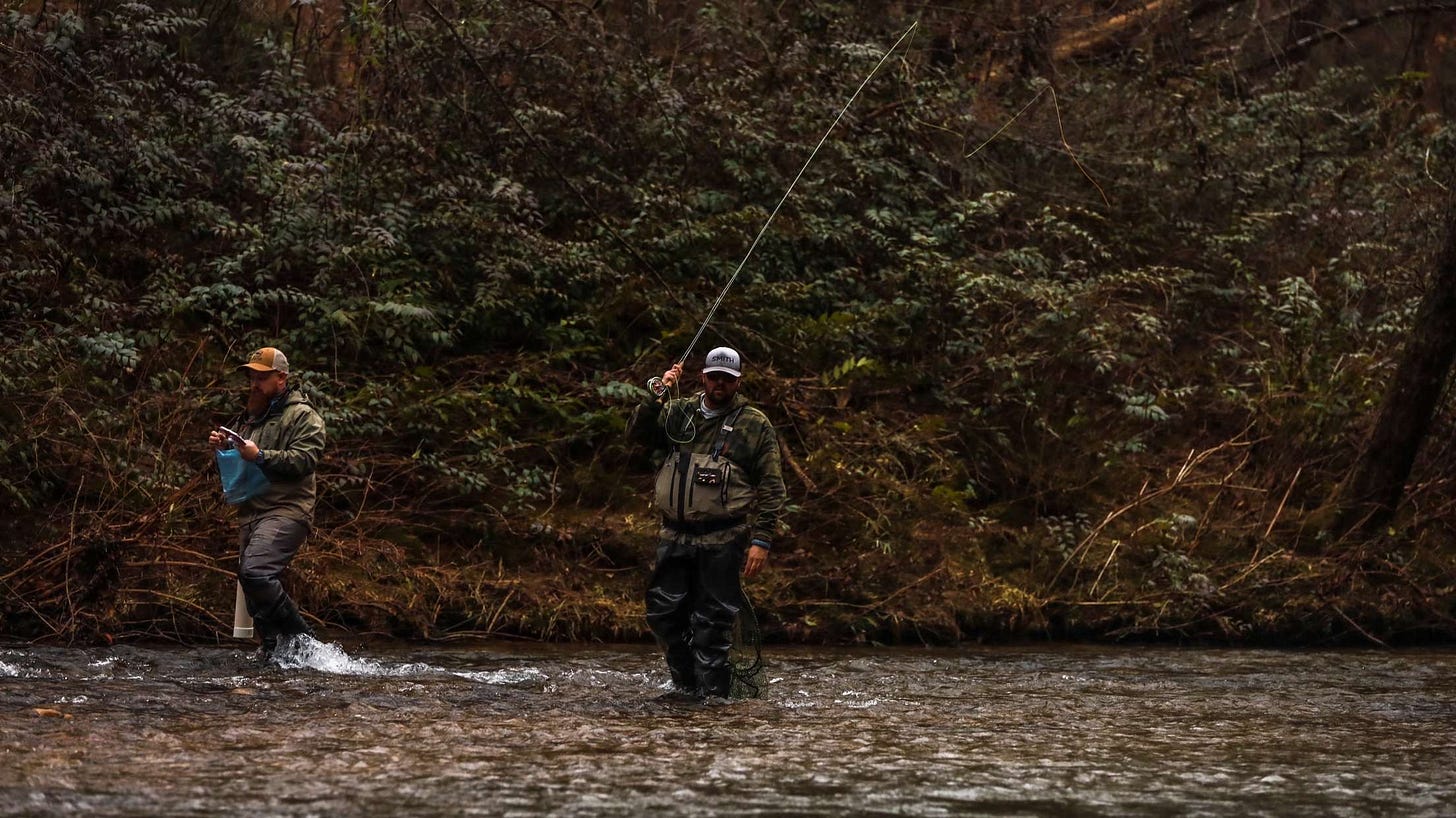
Reading the River
Spend enough time around Jacob and one thing becomes clear: he sees water differently.
Ask him about his ideal trout water, and the answer comes quickly.
“For trout, I love a long continuous riffle that’s about two to four feet deep with a noticeable trough running down the middle,” he says.
Add a little structure beneath the surface, and it becomes even better.
“If you’ve got bigger rocks under the surface breaking up the current, those spots become bug factories,” he explains. “The current constantly moves food to the fish.”
For Brewster, riffles like that represent the heart of trout water.
“I absolutely love a good long riffle.”
The Flies He Trusts
Ask any experienced angler to name just five flies they would carry, and the answer reveals a lot about their fishing philosophy.
Brewster’s selections reflect both simplicity and effectiveness, patterns that cover the entire water column.
His top five include:
• CDC Comparadun dry fly
• Soft Hackle Pheasant Tail
• France Fly (Frenchie tied with stretch tubing)
• Walt’s Worm
• Pine Squirrel Mini Leech
Together they represent a system, surface, mid-column, and bottom patterns capable of adapting to nearly any trout stream.
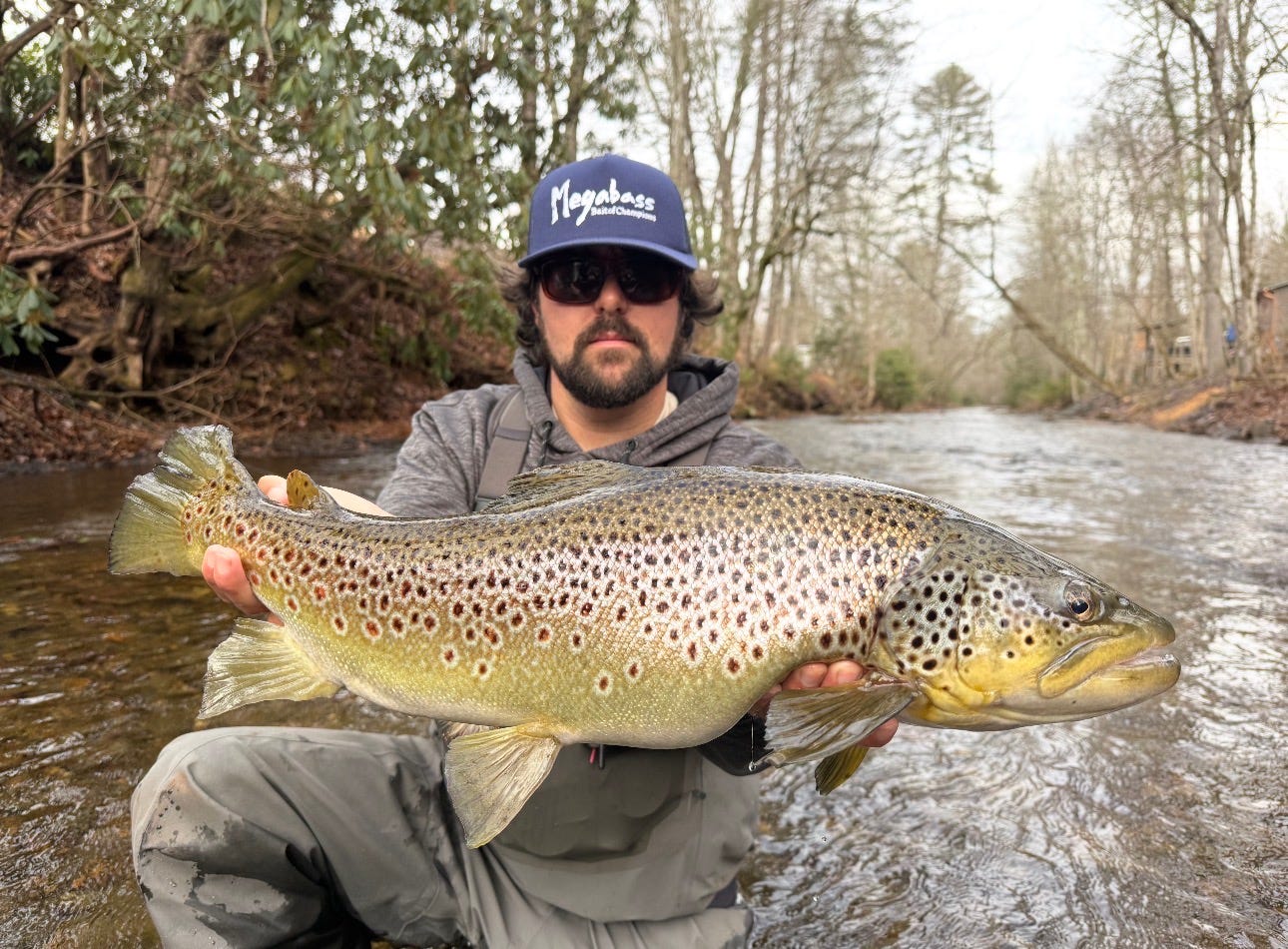
Moments That Stay With You
Years of guiding inevitably produce stories, but a few stand out.
One of Brewster’s most recognizable clients came in 2019.
“Probably my most well-known guest was Donald Trump Jr.,” Brewster says. “He had followed me on Instagram, and one thing led to another. We started talking about fishing and eventually ended up on the river together.”
But fame doesn’t always produce the most memorable moments.
Sometimes it’s simply the unexpected chaos that happens when a big trout gets involved.
“One day I had two guys fishing the Soquee River,” Brewster remembers. “One of them hooked a big rainbow that started jumping like a tarpon.”
What happened next became one of those guide stories that gets told again and again.
“The fish took off downstream and jumped through the air and actually slapped the other guy in the face,” Brewster laughs. “It was at least three feet in the air.”
Despite the airborne collision, the trout was eventually landed.
“That’s a moment I still talk about fairly often.”
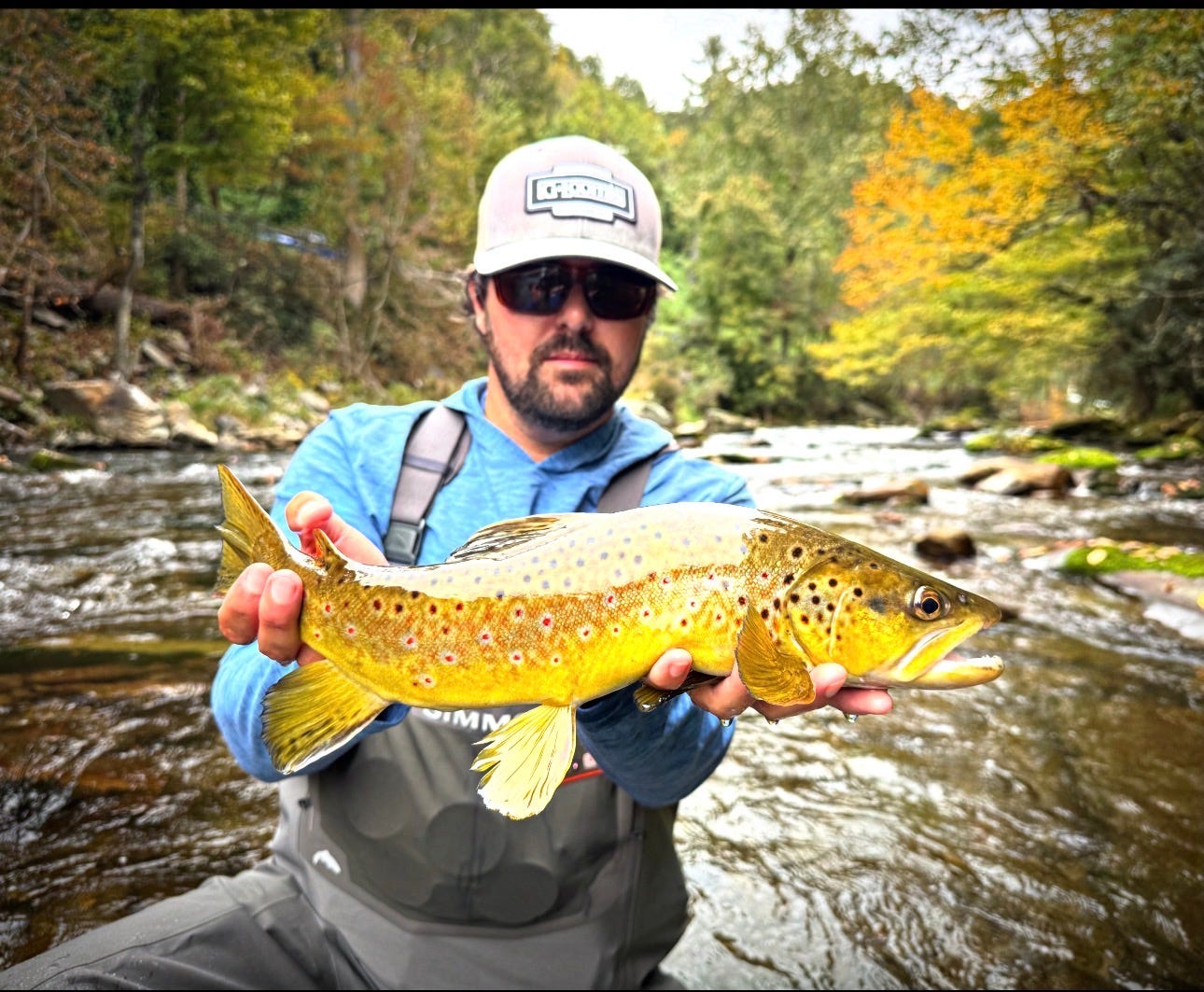
Rivers That Shaped an Angler
Every angler has water that defines them, places where they learned, struggled, and eventually figured things out.
For Brewster, those waters lie in the mountains of Georgia.
“The headwaters of the Chattahoochee and the Tallulah River mean a lot to me,” he says. “Those places shaped me as an angler.”
Both rivers carry deep sentimental value, even as time has changed them.
“They’ve taken some hits from overfishing, habitat loss, and other factors,” Brewster admits. “But those places will always be a huge part of my fly fishing journey.”
The Art of Slowing Down
For anglers new to fly fishing, Brewster’s advice may sound simple, but it’s often overlooked.
“Be patient,” he says. “If you’re struggling to cast or make a mend, chances are you’re trying too hard.”
Fly fishing rewards rhythm more than force.
“Slow down and let the rod and line breathe.”
Frustration, he believes, is the biggest obstacle for many beginners.
“We all learn through mistakes. That’s part of it,” Brewster explains. “But if you start rushing and overdoing things, it just becomes harder.”
His favorite phrase captures the philosophy perfectly.
“The old saying ‘fast is slow and slow is fast’ absolutely applies to fly fishing.”
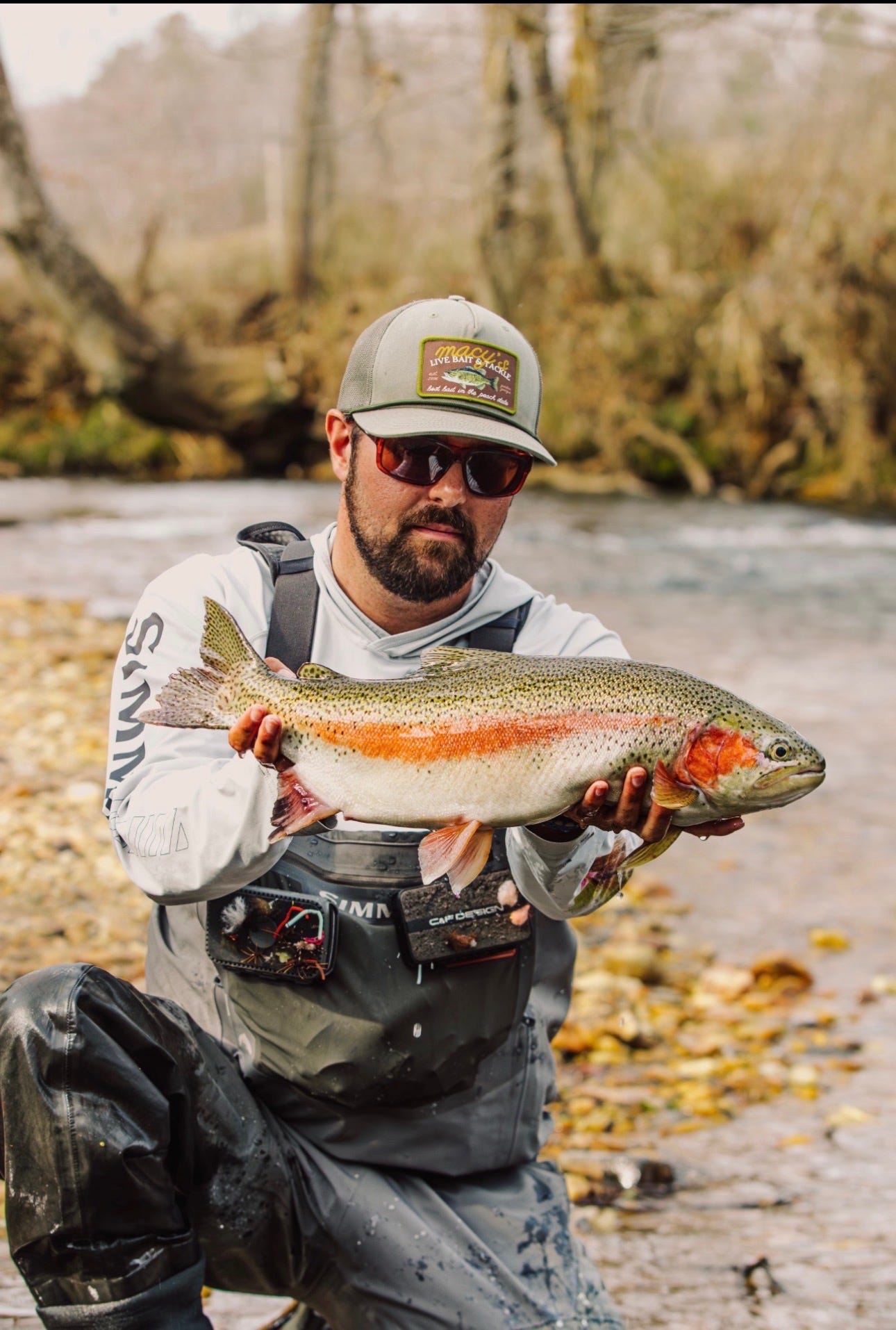
Why the River Never Gets Old
After nearly three decades of fishing, Brewster still finds something new every time he steps into moving water.
“Every day is different,” he says. “Every river is different.”
Even a familiar stretch of water never truly repeats itself.
“The current is never exactly the same. The drifts are never exactly the same.”
That constant change keeps the sport fresh.
“Rivers shift. Stream structure changes. Fish behavior changes from day to day and year to year.”
But beyond the tactics and the trout, there is something deeper that keeps Brewster returning to the water.
“There’s something about standing on a river knowing that the water has been flowing through those hills as long as life itself,” he says.
Ever changing, yet eternal.
“And that,” Brewster says, “will never get old.”
Tightlines,
John
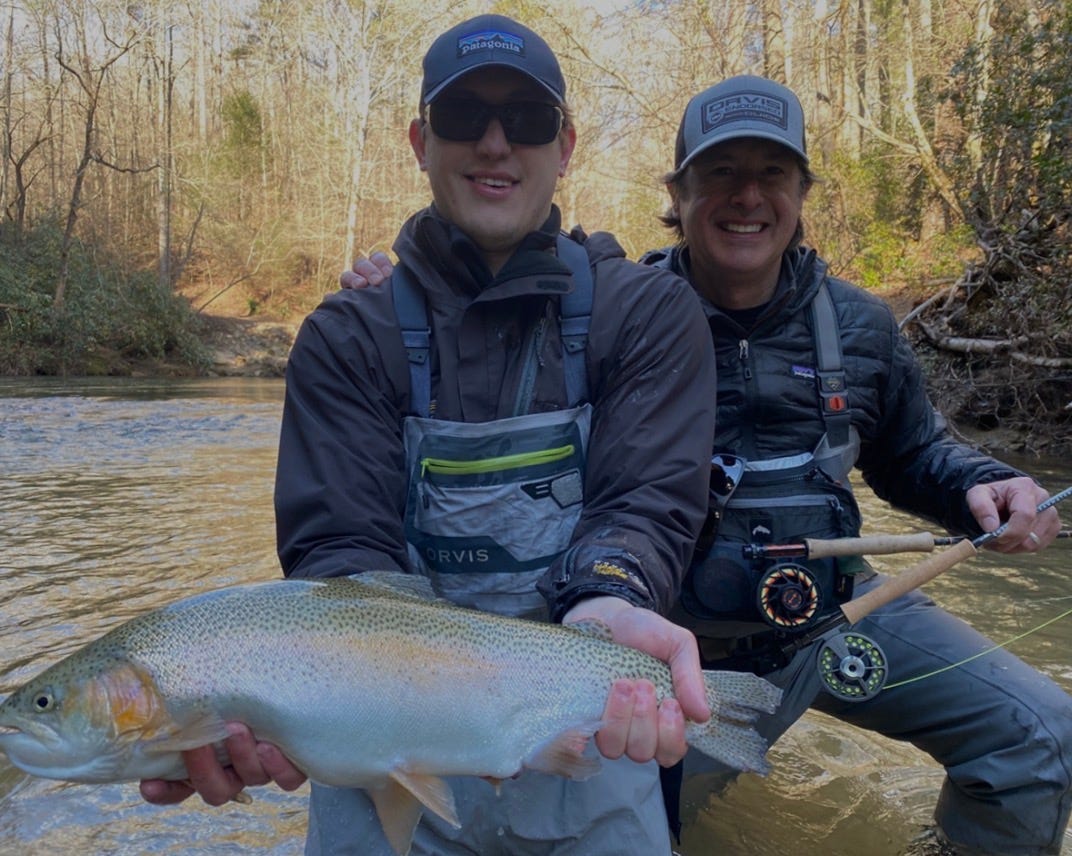
A day my son, Jackson and I will never forget. Jacob put us on multiple trophy fish.
 /fishingtv
 /fishingtvapp
 /fishingtv