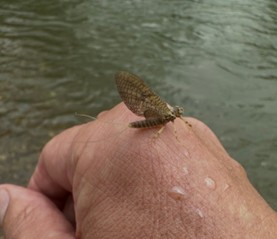
The March Brown: A Fly That Has Stood the Test of Time
By John Langcuster, Host of the Rise Podcast by Fishing TV
There are certain flies that catch fish, and then there are flies that become part of an angler’s education. For me, the March Brown belongs in the latter category.
My appreciation for this remarkable pattern began through conversations and time spent with Kim Waters of Wales. Kim’s knowledge of rivers and insects runs deep, and his enthusiasm for the March Brown was contagious. As we discussed the famous hatches of the Welsh and English rivers, he explained not only the effectiveness of the pattern but also its rich history and versatility. Like many of the best lessons in fly fishing, it was shared stream side through stories rather than formal instruction.
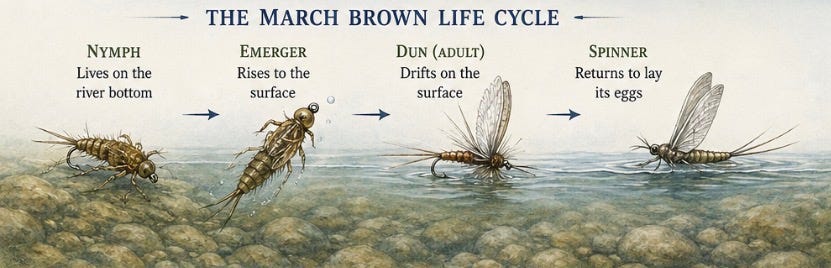
The March Brown occupies a unique place in fly fishing history. Originating as an imitation of one of spring’s most anticipated mayflies, it was first designed as a floating dry fly to imitate the natural dun. As anglers sought ways to imitate the insect before emergence, legendary English angler and fly dresser G.E.M. Skues helped revolutionize fly fishing by adapting many traditional patterns into subsurface presentations. His March Brown nymph demonstrated that trout often feed beneath the surface long before insects hatch, challenging the prevailing dry-fly orthodoxy of his day.
Today, the March Brown remains one of the world’s most dependable mayfly imitations. From the chalk streams of southern England to the freestone rivers of Wales, from the Ozarks and Appalachians to the western trout streams of North America, prolific March Brown hatches bring rivers to life each spring. Even when the hatch is sparse, the fly’s profile suggests a variety of aquatic insects, making it effective throughout much of the season.
Its versatility is perhaps its greatest strength. Fished dead-drift as a dry fly, it perfectly imitates the struggling dun. Tied as a soft hackle or nymph and presented below the surface, it represents the ascending emerger that trout often prefer. During a hatch, a dropper combination of a March Brown dry with a March Brown nymph suspended beneath can be exceptionally productive, covering both feeding zones.
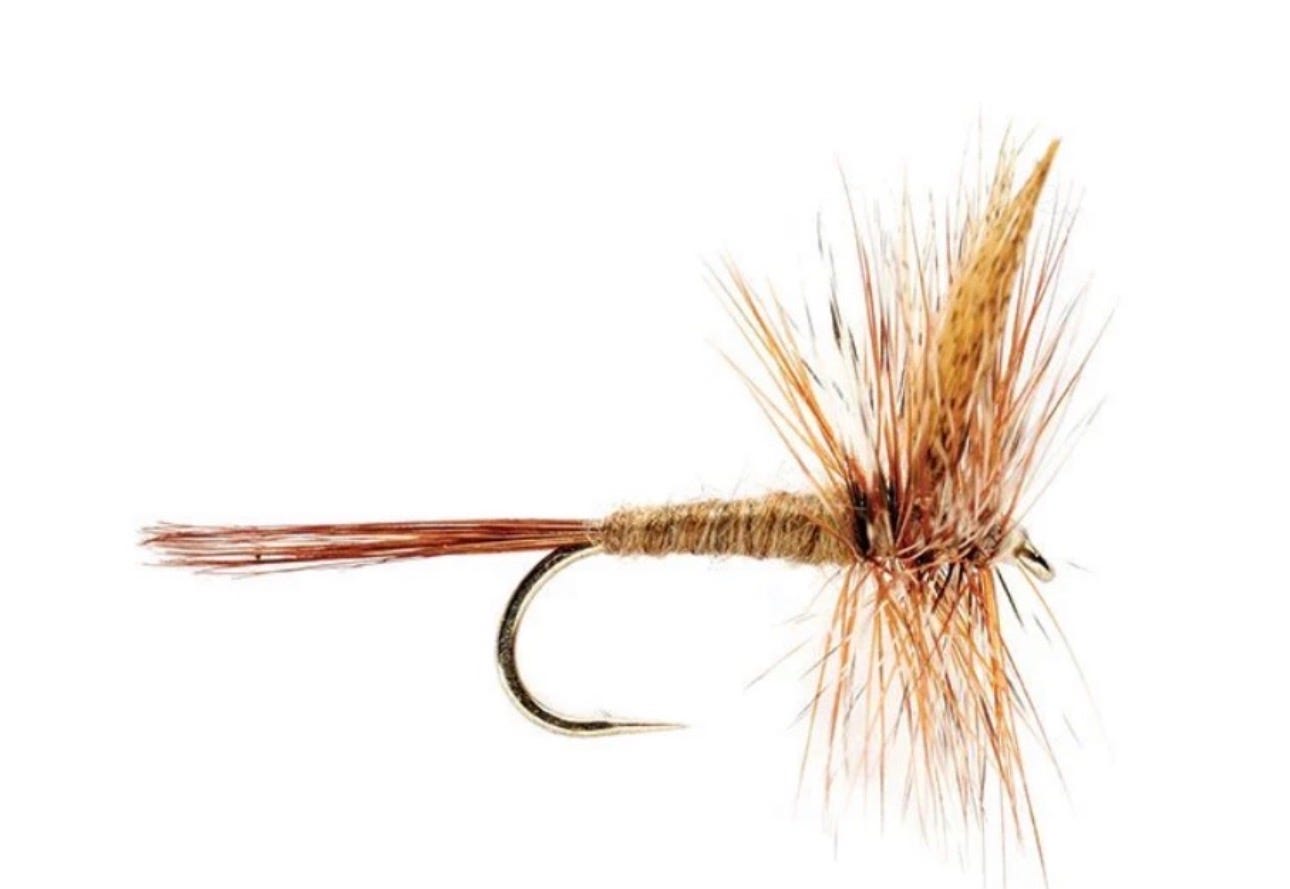
Tying the Classic March Brown Dry Fly
Hook: Standard dry fly hook, sizes 10–14
Thread: Brown 8/0
Tail: Speckled partridge or mottled hen fibers
Body: Blend of hare’s ear and muskrat or natural olive-brown dubbing
Rib: Fine gold wire or gold tinsel (optional)
Wing: Mottled turkey or mallard flank slips tied upright
Hackle: Brown furnace or grizzly-brown cock hackle matched to hook size
Begin by laying a smooth thread base and tying in a sparse tail approximately the length of the hook shank. Dub a gently tapered body that grows slightly thicker toward the thorax, creating the natural silhouette of the insect. If desired, counter-wrap with fine gold wire for added durability. Tie in paired wing slips upright and divide them before applying the hackle immediately in front of the wings. Finish with several wraps of hackle and a neat whip finish.
The resulting fly is elegant without being complicated, a pattern whose simplicity reflects generations of refinement by anglers who understood that proportion and presentation matter far more than excessive detail.
Fishing the March Brown
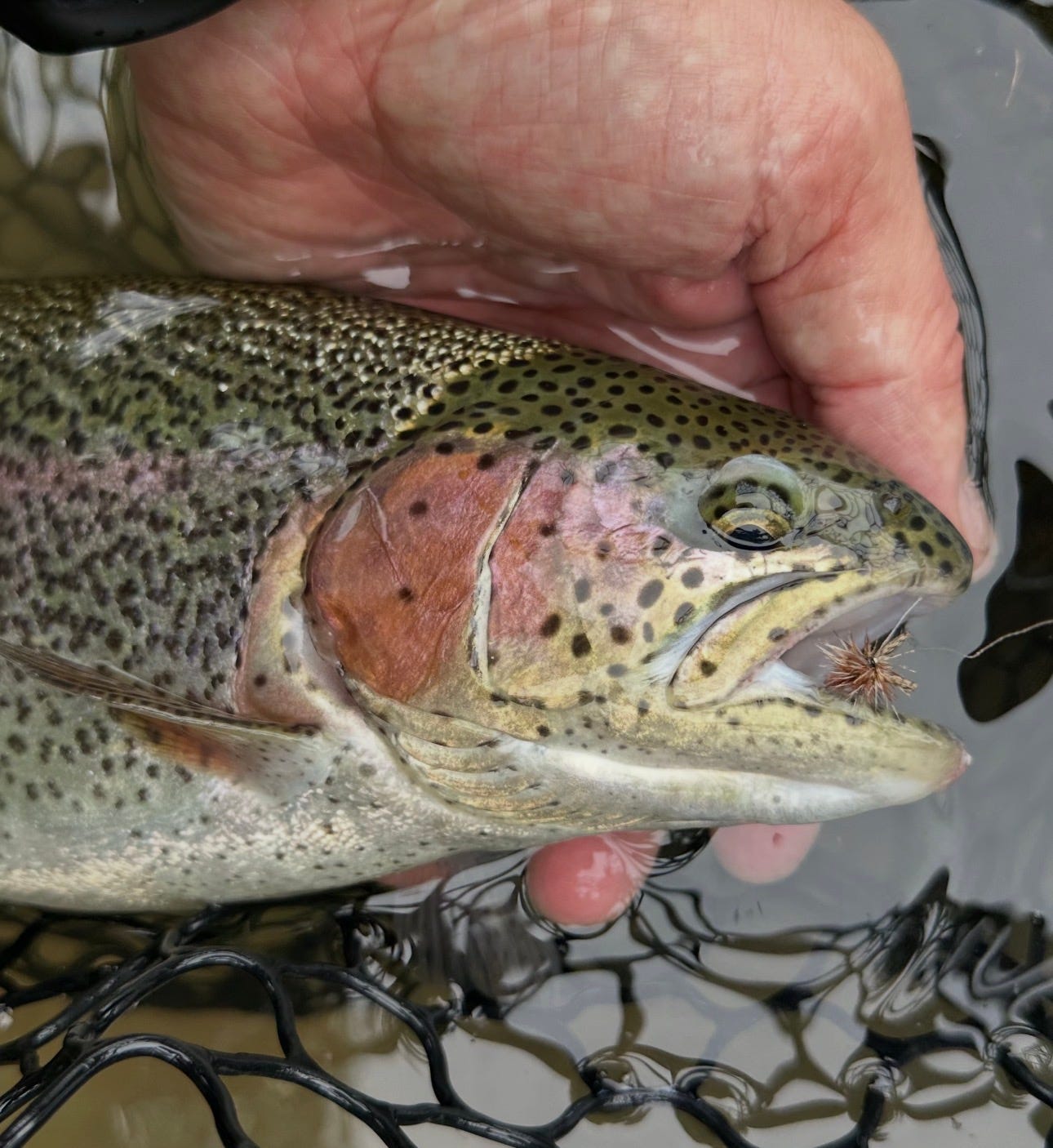
The beauty of the March Brown lies not only in its history, but also in its adaptability. It is one of the few patterns I never hesitate to tie on, whether I’m standing beside a chalk stream in southern England or a trout river here in the United States.
During a hatch, I prefer to fish the March Brown dry on a 9- to 12-foot leader tapered to 5X. The fly should float naturally with as little drag as possible. More often than not, trout will rise with confidence, taking the fly as it drifts through their feeding lane.
When fish become selective or begin feeding just beneath the surface, I suspend a March Brown nymph or soft hackle 18 to 24 inches below the dry fly. This arrangement allows the dry to serve as both an imitation and a strike indicator while the subsurface pattern imitates the emerging insect. Many of the largest trout I’ve caught during a March Brown hatch have ignored the dry and confidently taken the nymph below.
Outside of the hatch, the March Brown continues to produce. Its silhouette resembles many aquatic insects, making it an outstanding searching pattern throughout spring and into early summer. Dead-drifted through riffles, swung at the end of the drift, or allowed to rise naturally in the current, it consistently attracts trout.
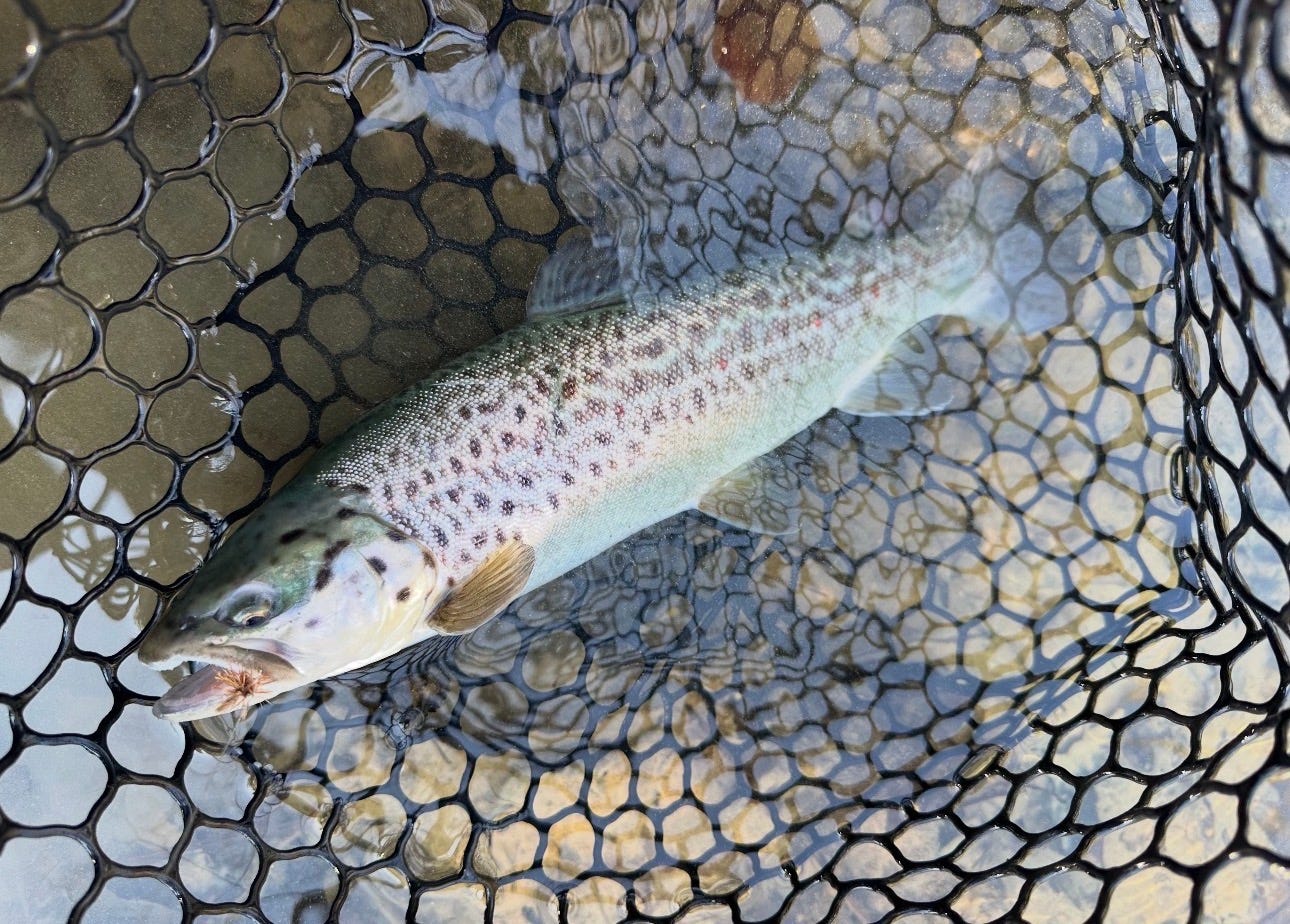
One lesson I learned from Kim Waters is to trust the fly. Too often, anglers abandon a productive pattern after only a handful of casts. The March Brown rewards patience and presentation. Fish it with confidence, allow it to drift naturally, and let the river do the work.
Tight lines,
John

 /fishingtv
 /fishingtvapp
 /fishingtv