Ghosts in the Grass: A Fly Fisher’s Pursuit of Carp
By John Langcuster, Host of the Rise Podcast by Fishing TV
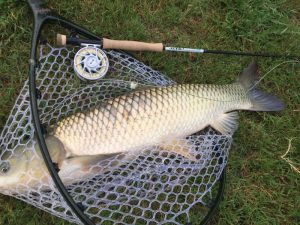
After moving to Mississippi, I kept up my pursuit of carp and quickly realized something: these weren’t easy fish to catch, especially the grass carp. Even when they were just two or three pounds, they were as wary as any fish I’ve ever encountered.
Over time, I started watching their patterns some days during my lunch break, sitting on a picnic table by the lake, I would observe. Over time, I learned moon phases, weather have an impact on their daily habits. I also struggle with the right fly patterns. They would not eat nymphs, small dry patterns. It became frustrating!
One day, something unusual caught my eye. The grounds crew was mowing the grass around the lake, and I watched as grass clippings blew into the water, the carp would rise and eat. The bigger carp would congregate to the middle of the lake feeding aggressively on the floating grass. I had a couple of takeaways, if I could match that pattern (grass clippings), I might finally have a shot at catching these elusive fish.
I experimented with all kinds of creations on the vise. One of the first flies that showed promise was a fly tied by a nun specifically for grass carp, clever and delicate, moderately effective. I needed something better to catch their attention.
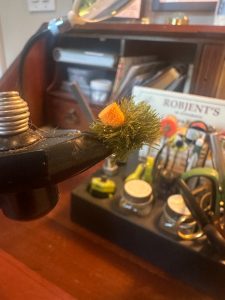
Grass Fly with indicator
One afternoon, I took some old bread out to the lake to feed the ducks. As the bread floated out, I noticed something wild: the carp were slamming it on the surface. Grass Carp around 20- and 30-pounds, charging through the ducks like torpedoes just to get at the bread. I knew I was onto something.
So, I went home and tied my version of a “bread fly”. A soft, white fly I nicknamed the Wonder Bread Fly. I would cast it out around the grouping of ducks. Eventually, I tricked a carp, the fish I started to work around took the fly aggressively. During a short span in April, the lake produced some nice fish. My “run” lasted about a week. Then, just as quickly as they’d turned on, the carp shut down again. They are unpredictable, mysterious, and frustrating.
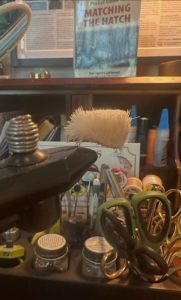
Bread Fly
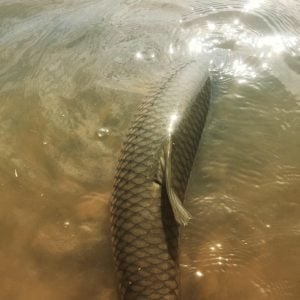
I recall some of the best days were rainy ones. The water would rise and flood the edges of the lake, and the carp would move in, feeding on grass and weeds in the shallows. It was the perfect opportunity to sight fish, watching their tails and subtle movements, waiting for the right moment to cast. The grass fly was highly productive in those situations.
The best part? I released every single one of them and I wonder: are any of those fish still alive? From my research, grass carp do not spawn like other fish, they live out their years, eat what they can, and eventually die. Over time, I’ve noticed fewer and fewer of them in the lake.
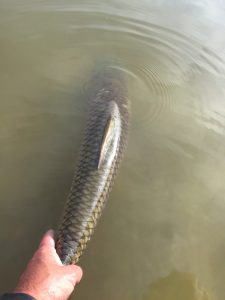
Quick Release
Grass carp, unlike common carp, are more skittish and selective. Overseas, especially in the UK, carp fishing is a revered sport, and I get it. These fish are smart, strong, and full of personality. I found that using a 6- to 7-foot fly rod, forward-weight line, and a 12-foot leader gave me the best shot.
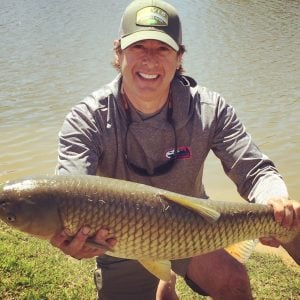
Victim of the “bread fly”
Another key tactic, staying low, moving slow, and casting from cover like the shade of a tree works well. Every cast was a chess move watching your position around the sun and avoid creating shadows.
Looking back, grass carp taught me patience and precision. It really helped me hone my skills for bone fish and very selective trout in clear water. They’re a fish that makes you earn it.
Tight lines,
John
 /fishingtv
 /fishingtvapp
 /fishingtv