After the Storm: Why Summer Rain Can Be a Fly Fisher’s Best Friend
By John Langcuster, Host of The Rise Podcast by Fishing TV
Summer in the Ozarks and across much of the eastern United States often follows a familiar rhythm. The morning begins under bright skies, the air grows heavy by midday, and then, almost without warning, the horizon darkens. Thunder rolls across the hills, lightning flashes, and rain pours from the sky.
If you’re standing in a trout stream holding a graphite fly rod, there’s only one decision to make: get out of the water immediately. No fish is worth the risk of lightning.
But once the storm passes, something remarkable often happens.
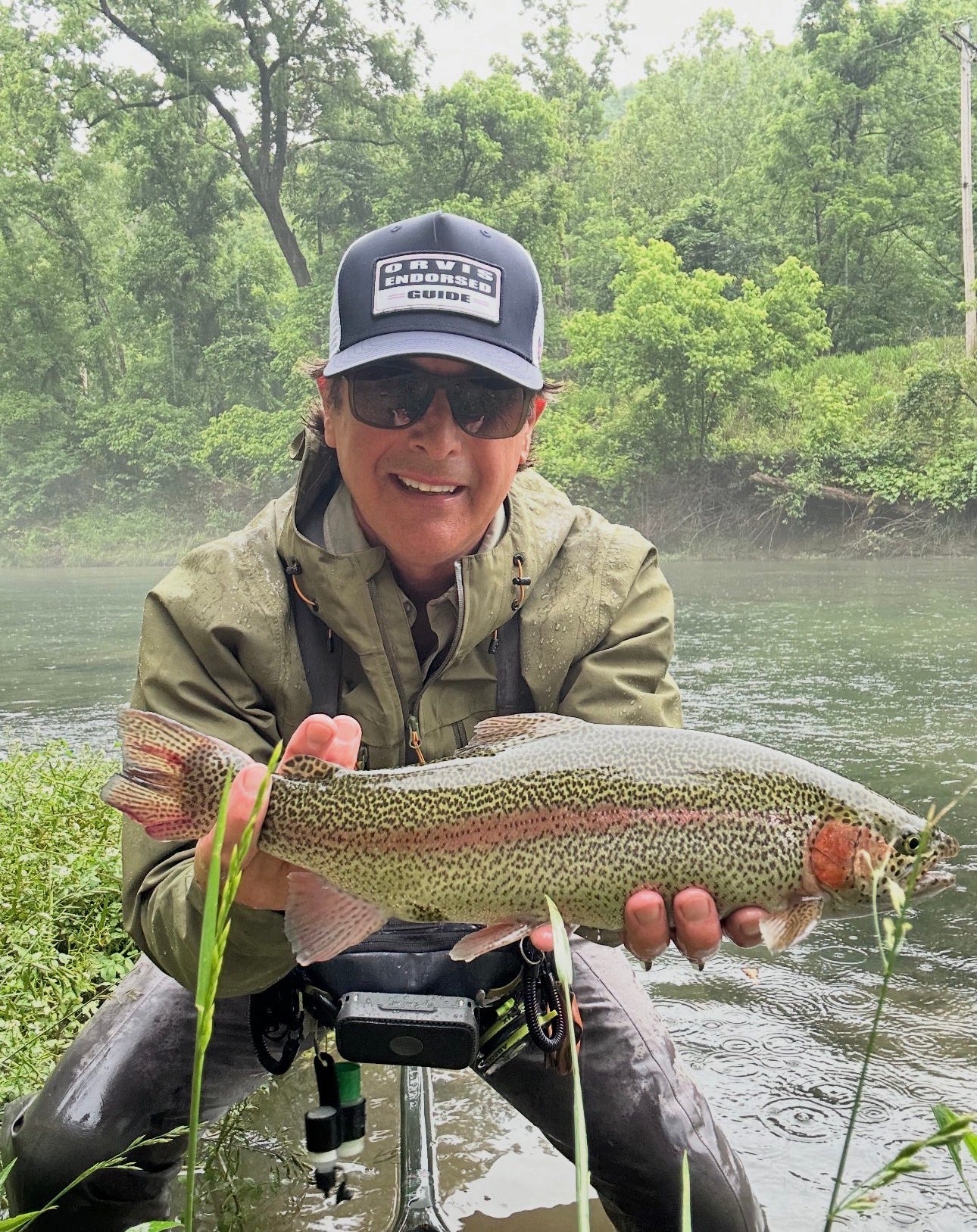
I’ve come to believe that some of the best fishing of the day can begin after the rain.
In an earlier article, I wrote about targeting grass carp following a summer thunderstorm. As the water rises, fresh grasses along the shoreline become flooded, drawing these powerful fish into places where they can feed aggressively.
I’ve found trout respond in much the same way.
This spring, while fishing the Chattahoochee River near Atlanta, the water release from the dam began while I was on the river. As the flow increased, so did the trout’s activity. Fish that had seemed reluctant only moments before suddenly became aggressive, and I found myself connected to several beautiful trout.
I’ve witnessed that same pattern countless times on smaller streams. As rainwater pours off the hillsides and mountains, stream levels rise. The current changes, oxygen levels increase, food is washed into the river, and trout often become noticeably more active.
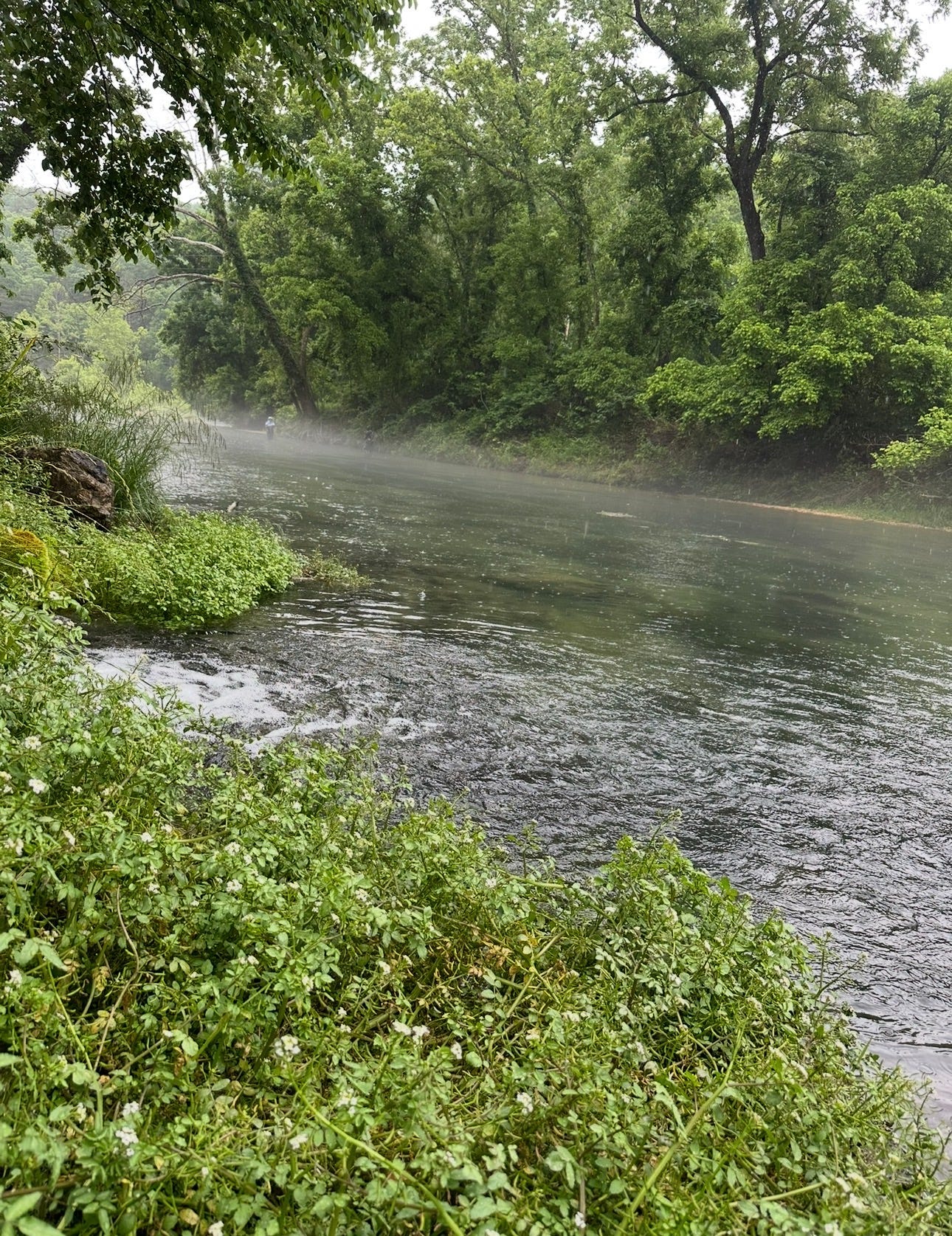
The key is recognizing that the river you were fishing before the storm is no longer the same river afterward.
As the water rises, your setup should change with it.
Your indicator or weight may need to be adjusted. Trout that were feeding in one lane before the storm may now be holding in entirely different water. Their feeding lanes often shift with the current, and successful anglers adjust right along with them.
Water clarity changes as well.
A slight stain in the water often means it’s time to think differently about fly selection. Rather than relying solely on subtle, natural imitations, don’t hesitate to tie on an attractor pattern that offers more visibility. Sometimes a brighter, more noticeable fly is exactly what trout need to find your presentation in slightly colored water.
Perhaps the most important adjustment, however, has nothing to do with flies or leaders.
It’s observation.
When the rain ends, resist the temptation to rush back into the stream. Stand on the bank for a few minutes. Watch the current. Study how the water has changed. Look for movement.
During my conversation with Jeremy and Lisa on The Rise Podcast, they described something fascinating they frequently observe on the White River. Large brown trout will sometimes gather in pods, almost like schools of redfish. I’ve witnessed similar behavior on several spring creeks. When trout begin moving together, changing positions frequently, and actively cruising, they’re telling you something.
They’re feeding.
That’s your cue to match what the river is offering or to choose an attractor pattern that gets their attention.
One lesson fly fishing continues to teach me is that success rarely comes from forcing the moment.
You allow the river to speak first.
You observe.
You adjust your leader.
You change your fly.
You slide your indicator a little deeper.
Then you fish the water the way it’s not the way it was an hour earlier.
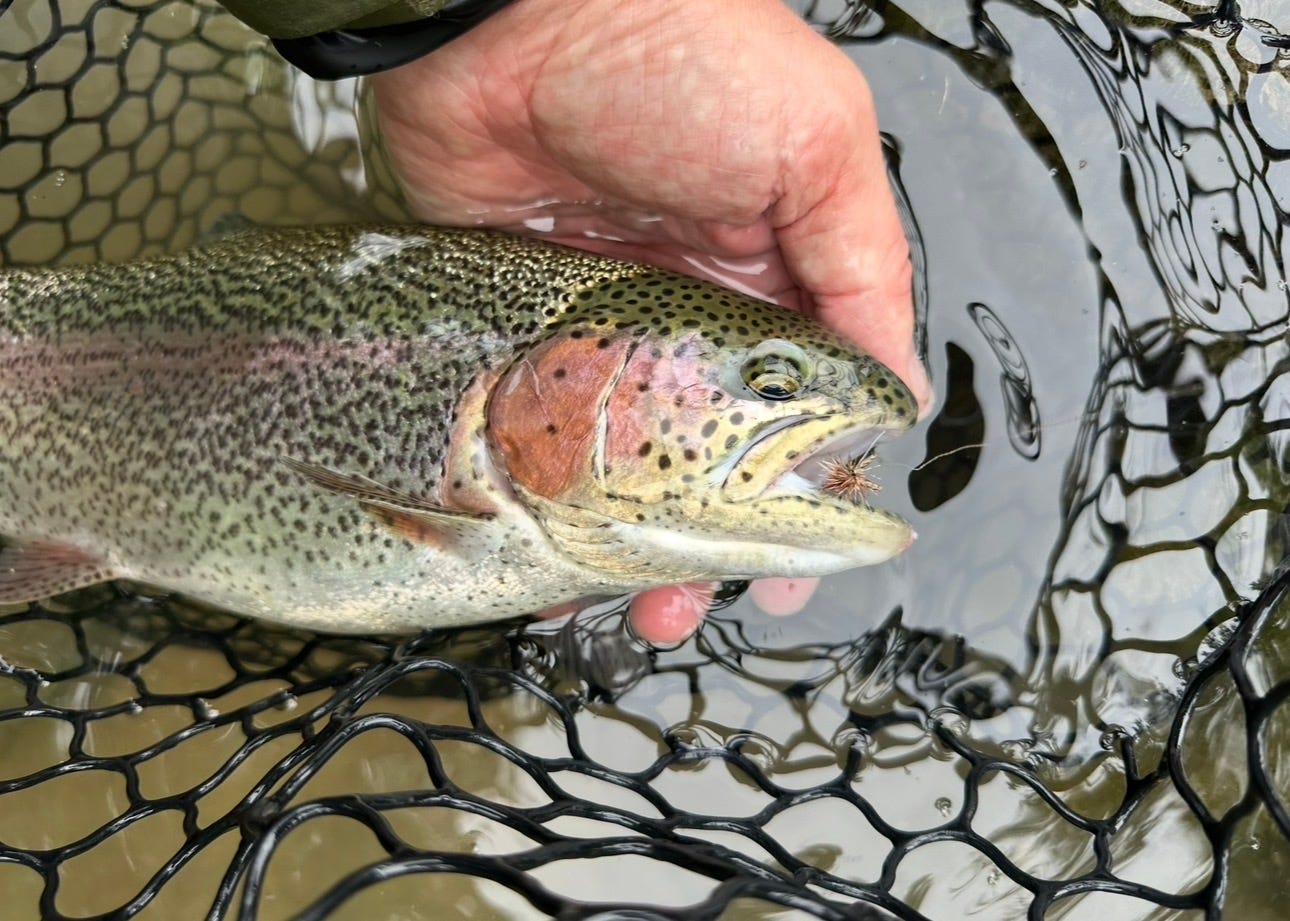
Late in the afternoon, as the skies clear and temperatures begin to cool, another opportunity often presents itself. Caddis may begin to emerge. I’ve also used a non-hatch fly like a March brown to catch fish. Beetles, ants, even hoppers find their way into the current. Trout that became active during the rise often continue feeding well into the evening, creating some of the most memorable hours of summer fishing.
So the next time thunder interrupts your day, don’t think of it as the end of your fishing.
Think of it as an intermission.
Wait safely until the storm has completely passed, step back into the river with fresh eyes, make the adjustments the water demands, and let the river tell you what comes next.
Some of the finest moments in fly fishing begin after the storm.
Tight lines,
John

 /fishingtv
 /fishingtvapp
 /fishingtv