Casting Across the Atlantic: What a Chalk Stream Taught an American Angler
By John Langcuster, The Rise Podcast-Fishing TV
Several years ago, while flipping through cable TV channels in search of a fly-fishing show, I stumbled upon Game Fisher’s Diaries with Rae Borras on Fishing TV. Over the years, many of the shows I grew up watching disappeared, so finding Rae’s series was a nice discovery. His travels across various waters were engaging. One episode, “Put to the Test” caught my attention.
This episode focused on the chalk streams of Southern England. It explored the legacies of three anglers: William Halford, G.E.M. Skues, and Frank Sawyer. Rae’s guest, Simon Cooper, added his account of history around the chalk streams. After watching, I looked up Simon and discovered a documentary he produced called Chalk along with Fishing TV, CEO Ed Burgess.
Chalk was a documentary about Chalk streams; it took a deep dive around its origins many years ago and all that went into establishing fly fishing “code” as we know it today.
From that day forward, I gathered books like, Halford’s Dry-Fly Man’s Handbook, Skues’ Nymph Fishing for Chalk Stream Trout, and Sawyer’s Nymphs and the Trout became my companions. The more I learned, the more I knew I had to experience these waters myself.
Soon after COVID, I boarded a flight to London and made my way to Stockbridge, England, the heart of chalk stream country. It was everything I had imagined: the River Test winding through the countryside, the Grosvenor Inn with its historic connection to the Houghton Fishing Club. I was fully immersed. I even found myself sitting at a table next to the Houghton Club members in the Inn just to overhear what had been hatching the night before.
River Dun
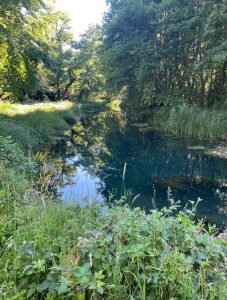
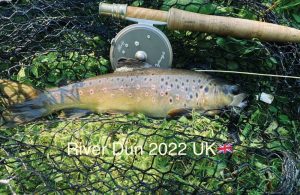
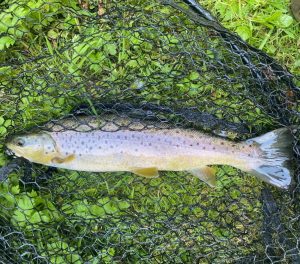
My first day was on the River Dun. Following a taxi ride from Stockbridge, I arrived at the gated beat. Entering the code and walking along the bank of a chalk stream for the first time was special. My two Winston Rods and Hardy reels were uncased and set up with a parachute Adams and a newly introduced, Robjent’s Daddy. I approached the casting platform and resting upstream a beautiful brown trout, fins up in the right position. On my second cast, a beautiful wild brown trout rose and took my fly, not the brown I was targeting, but a smaller one on the Daddy. It was a wonderful first day with several fish to the net.
Below: A beat on the River Dun, a nice brown caught on a parachute adams and a nice brown falls victim to a Robjent’s Daddy.
Bullington Manor
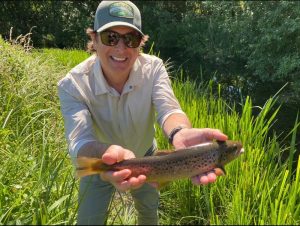
The next day, I fished at Bullington Manor on the River Dever with Robert Preston. He was a wonderful teacher and a pleasure to be around. He introduced me to the Klinkhammer, a fly I’ve never used in my 50 years of fishing. That day, it brought several fine trout to hand. Robert was extremely helpful in teaching me the “English Way” of Observing, Imitating and Presentation.
Below: Klinkhammer fly of choice for a brown trout, Bullington Manor Beat and my first UK grayling on a pink shrimp.
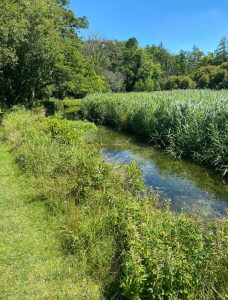
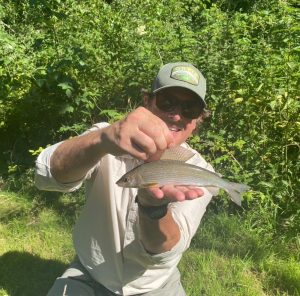
The handful of days on the chalk streams on my first trip taught me several lessons I’ve carried back to the states. Below a handful of take-a-ways from my initial trip:
Slow Water, Slow Mind
As a nymph fisherman, I’ve always valued a good drift. Chalk streams steady, glassy flows teach you that neither a rising trout nor a moment of clarity can be hurried. You begin to value the art of waiting, letting the rhythm come to you instead of charging ahead.
Presentation Over Power
In America, some rivers reward long casts and aggressive approaches. On chalk streams, that’s a quick way to spook fish. I even researched the best lines to land on water without spooking fish. The Cortland’s Creek line has my vote. Finesse, short casts, soft landings, and natural drift matter and this line checks all the boxes.
Read the Water, Read the Land
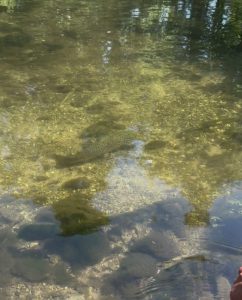
My first morning with Robert on the River Dun began with tea, then a slow walk along the bank, scanning for targets. In gin-clear water, you see it all, weed beds waving in slow motion, trout holding in place, tiny insects on the surface. You must read the signs before making a move.
Respect the History
Before my first trip, I read Halford’s rules and the detailed packet for the beat. Chalk streams are often strictly managed: beat assignments, catch-and-release, sometimes even dress codes. At first, it may feel overly formal to an American used to open-access waters, but you come to see it as stewardship, not stuffiness.
History Beneath your “Wellies”
In the States, many fishing spots feel timeless. Chalk streams feel ancient. You’re walking where Izaak Walton fished, where Edwardian gentlemen cast cane rods, where the same gravel has shaped the current for millennia. That sense of heritage deepens every cast.
My return, The Greyhound
A few years after my first trip, I returned to South England. My planned trips, The Greyhound Beat and Bossington Estate, both on the River Test.
I arrived in Stockbridge the day before, stopped in at Robjents, South England’s premier sporting store. The owner, Alistair Robjent was away, but Andrew was helpful as ever. He, along with other fellow fly fishers, were a big help. When you visit, you receive advice on approach along with flies and a shot of confidence.
I walked over and checked in at the Greyhound. My room key came with what I like to call the “Keys to the Kingdom”—full access to The Greyhound beat on the River Test until dark.
As I arrived shortly after nine, I strolled the boundary of the beat, spotting browns and rainbows in the clear water. As I made my way back to the fishing hut, Mozart played on the radio as I rigged my Winston rods and Hardy reels. I fished a nymph early as the rainbows were stacked up around the Hatch pool. I landed seven rainbows before lunch. Later in the day, I hooked a nice brown with a bucket list fly, sedge, after several upstream casts. It was a successful day as I focused on the fundamentals, Observe, Imitate and Present. It all came together.
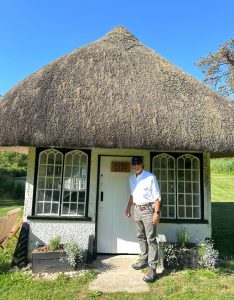
Below: The Greyhound in Stockbridge, Alistair Robjent of Robjent’s Stockbridge, UK and a productive day on The Greyhound Beat, River Test carrier stream.

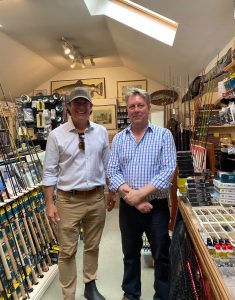
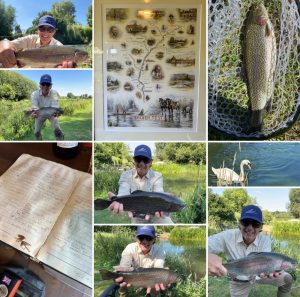
Bossington Estate
The next morning, Bossington Estate. Truly a brown trout haven. My son, Jackson, joined me. It was a beautiful stretch of water. We positioned and began with dries. Jackson worked a caddis to a fish for nearly an hour before netting a beautiful brown. It’s always special to watch someone work a fish and being your son, it was even better.
Early in the day I was humbled. After a couple of casts, a brown took my parachute Adams and dragged me deep into the grass, leaving me with a nice catch of grass and sticks. A reminder that the fish are always the boss on these streams.
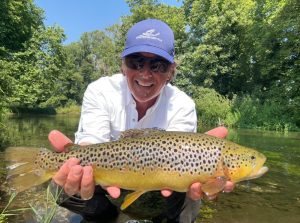
By day’s end, we did well. Five beautiful browns, including a couple over 20 inches, thanks to a caddis and a Peeping Caddis. The Home Beat at Bossington Estate offered great opportunities to some trophy trout.
Below: The “Home Beat’ Bossington Estate, brown trout a victim of a “peeping caddis and one of many native browns at Bossington Estate.
Why I’ll Always Return……
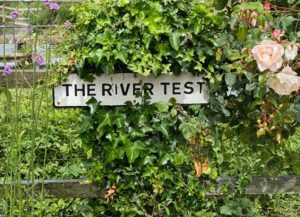
The chalk streams of England can lift your confidence one day and humble you the next. They offer beauty, history, and a kind of fishing that forces you to slow down and truly connect.
I’ve learned much from these streams, but more importantly, they’ve given me moments I’ll carry forever. Eighty-five percent of the world’s chalk streams are in Southern England. It’s a place where I lose all track of time. The pace of the water slows my mind and by day’s end, I notice more, speak less, and carry home not just trout stories, but memories.
Tight lines,
John
For story ideas, podcast collaborations, or anything in the world of fly fishing from river lore to hatches and the people who chase them, contact [email protected].
 /fishingtv
 /fishingtvapp
 /fishingtv